What Is Sonic Branding?
Definition, Examples & Benefits

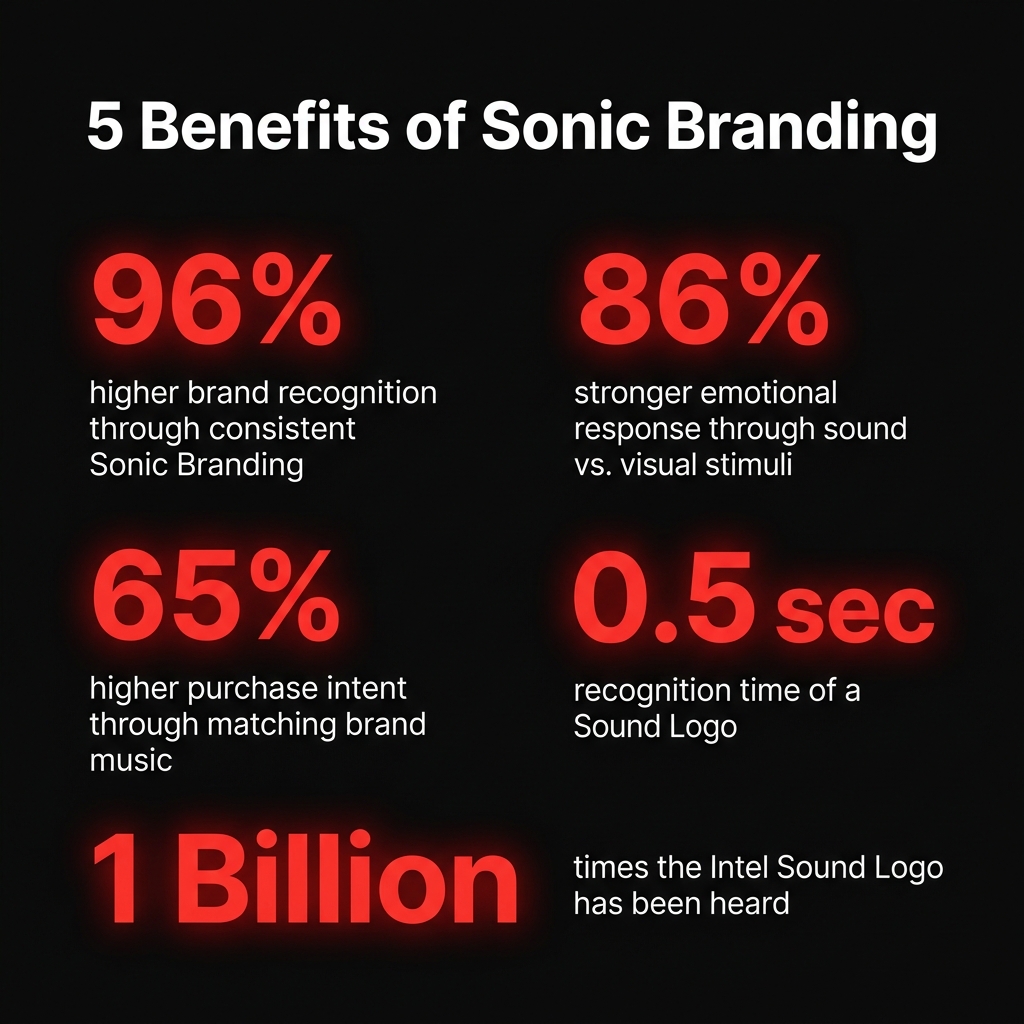
Sonic Branding is one of the most underestimated tools in modern brand management. While companies invest millions in visual identities, the acoustic dimension often remains untapped, even though studies show that sound triggers 86% stronger emotional responses than visual stimuli. In this guide, we explain what Sonic Branding is, why it works, which brands use it successfully, and how your company can benefit.
Contents
1. Definition: What Is Sonic Branding?
Sonic Branding (also known as Audio Branding, Sound Branding, or acoustic brand management) refers to the systematic and strategic use of sound to position, differentiate, and emotionally charge a brand. It is the acoustic counterpart to visual corporate design.
In concrete terms: every sound a brand produces, consciously or unconsciously, shapes customer perception. Sonic Branding makes this process controllable. Instead of allowing random or inconsistent sounds, you develop an acoustic system that conveys brand values, consistently, across all touchpoints.
"If your brand went silent tomorrow, would anyone notice the difference? If the answer is no, you have a Sonic Branding problem."
2. The Elements of an Acoustic Brand Identity
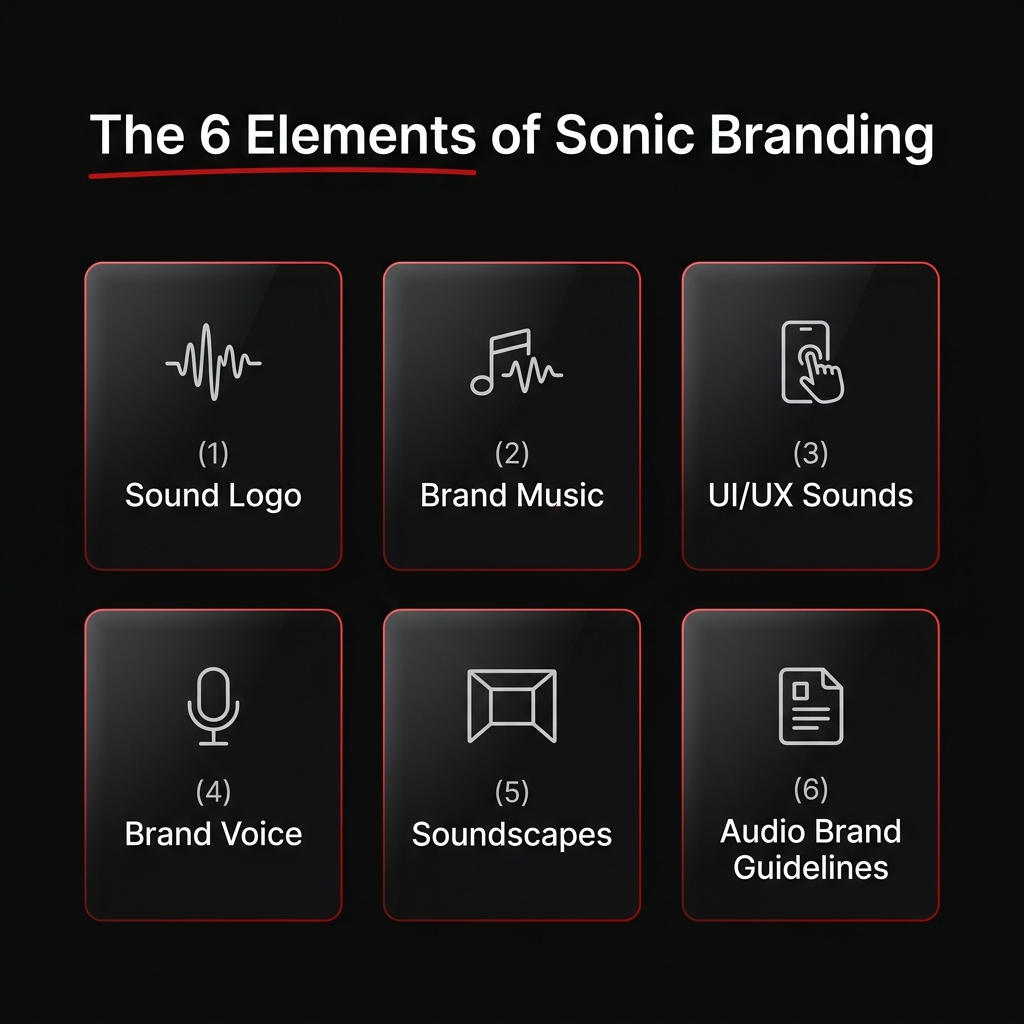
A complete Sonic Branding system consists of several building blocks that are coordinated with one another:
Sound Logo (Audio Logo)
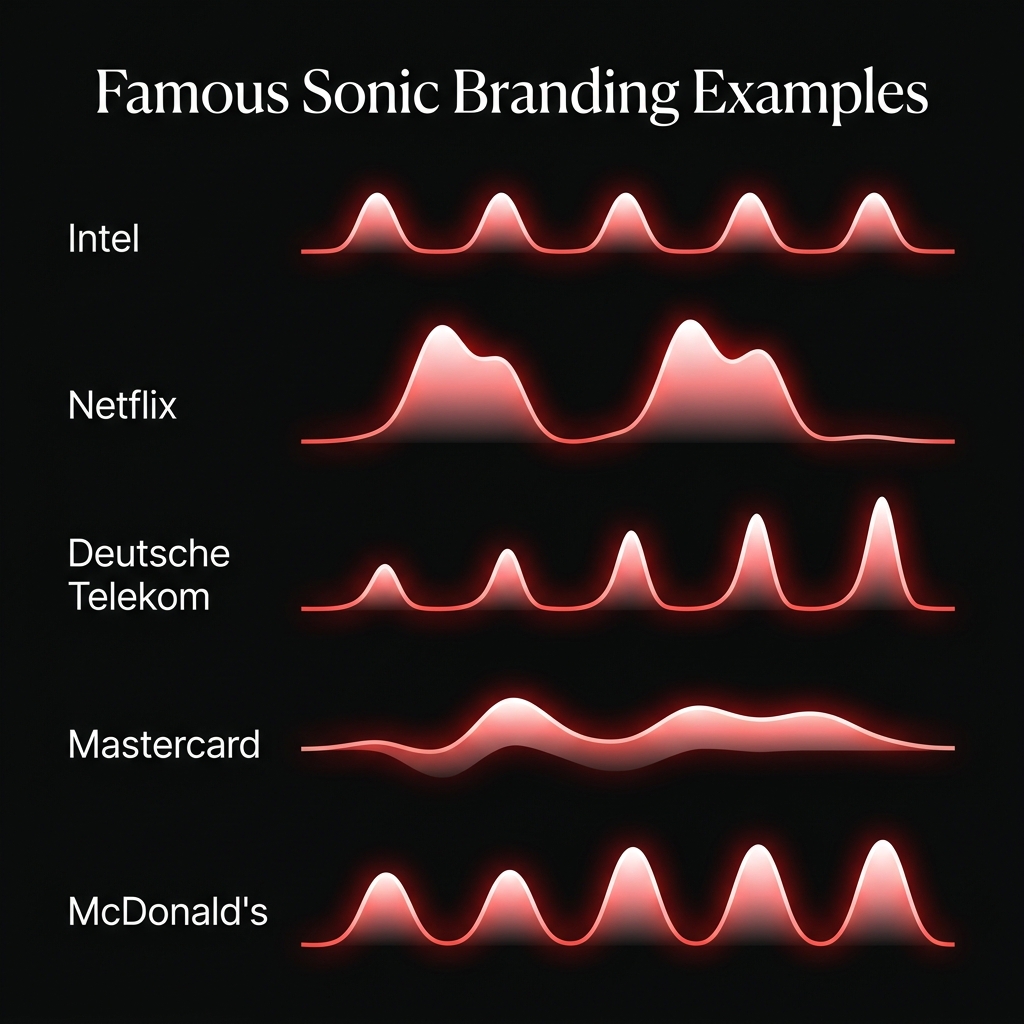
The centrepiece. A short, distinctive tone sequence of 1–3 seconds that acoustically identifies the brand. Like a visual logo, but for the ear. The most famous examples: Intel (5 notes), Deutsche Telekom (5 notes), Netflix ("Ta-dum", 2 notes), McDonald's ("I'm lovin' it", 5 notes).
Brand Music
A musical theme that conveys the brand's personality. It exists in various versions: long version for brand films, short version for social media, instrumental variation, vocal variation. All are based on the same musical DNA.
UI/UX Sounds
Functional sounds for digital products: app notifications, confirmation tones, navigation clicks, loading animations. They are subtle but perceptible, and carry the brand in every interaction.
Brand Voice
The strategic definition of the brand voice: what tone colour, what intonation, what speaking pace represents the brand? For advertising, IVR systems, podcasts, and voice assistants.
Soundscapes
Atmospheric sound worlds for physical spaces: flagship stores, trade shows, lounges, waiting areas. Soundscapes create mood and anchor the brand in space.
Audio Brand Guidelines
The rulebook for the consistent deployment of all elements. Like the CD manual for visual design, but for sound. Contains: usage rules, technical specs, do/don't examples, asset library.
3. Famous Sonic Branding Examples
The world's most successful Sonic Brandings show how differently acoustic identities can sound, and how effective they are:
Intel, "Bong" (since 1994)
Five notes that everyone knows. The Intel Sound Logo was composed by Walter Werzowa and is one of the most recognised acoustic brand marks in the world. It has been heard over 1 billion times and has significantly shaped Intel's brand recognition, even though most consumers never purchase the product directly.
Deutsche Telekom, "Da-da-da-da-da"
One of the most well-known sound logos in the DACH region. The five ascending notes convey progress, connection, and reliability. Telekom has consistently rolled out its Sonic Branding across all touchpoints over the years, a textbook example of consistency.
Netflix, "Ta-dum"
Just two notes, but instantly recognisable. The Netflix Sound Logo creates expectation and anticipation, the perfect emotional introduction to what comes next. It works in every country in the world, without translation.
Mastercard, "Sonic Brand Identity" (since 2019)
Mastercard was one of the first financial companies to introduce a complete Sonic Branding system. The Sound Logo is melodic, warm, and trustworthy, fitting for a brand that wants to be present at every transaction.
Mercedes-Benz / Audi / BMW
The German premium car manufacturers are investing heavily in Sonic Branding, not just for advertising, but also for AVAS (Acoustic Vehicle Alerting Systems), interior sounds, and infotainment systems. The sound of the vehicle becomes a brand experience.
4. Five Benefits of Sonic Branding
Benefit 1: Instant Recognition
The human brain processes acoustic signals faster than visual ones. A Sound Logo is recognised in under 0.5 seconds, before the eye has processed the visual logo. In a world of skip buttons and scrolling feeds, that is a decisive advantage.
Benefit 2: Emotional Activation
Sound activates the limbic system directly, the part of the brain responsible for emotions and memories. That's why a certain song instantly triggers feelings. Sonic Branding harnesses this mechanism purposefully and repeatably for your brand.
Benefit 3: Multichannel Consistency
Your brand lives on more and more channels: TV, radio, podcast, social media, voice assistants, in-store, phone, app. A visual logo works on many, but not all. A Sound Logo works everywhere there are speakers.
Benefit 4: Measurable ROI
Studies by the Audio Branding Academy show: brands with consistent Sonic Branding achieve up to 96% higher brand recognition. The University of Leicester found that music can increase purchase intent by up to 65% when it matches the brand.
Benefit 5: Competitive Differentiation
Especially in B2B and the mid-market, Sonic Branding is still rarely used. Those who invest now claim the acoustic space of their industry, before competitors do. Pure first-mover advantage.
5. How Is Sonic Branding Created?
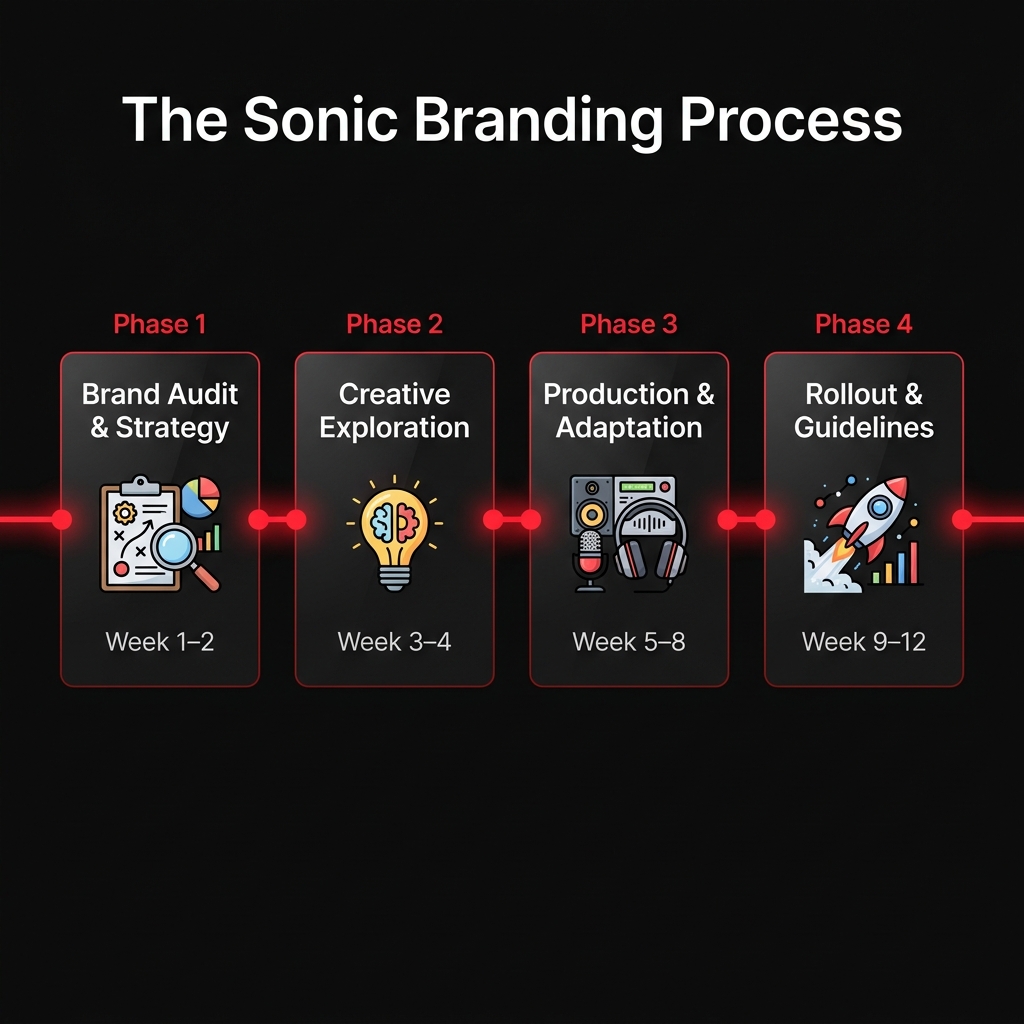
A professional Sonic Branding isn't created overnight. It is a structured process that typically takes 6–12 weeks and comprises four phases:
- Brand Audit & Strategy (Week 1–2), Analysis of brand identity, target audience, touchpoints, and competitors. Definition of acoustic brand values. Result: Sonic Briefing.
- Creative Exploration (Week 3–4), Development of 3–5 acoustic directions (moodboards). Presentation, discussion, and selection of the preferred direction.
- Production & Adaptation (Week 5–8), Production of the Sound Logo, Brand Music, and all adaptations. Professional recording, mixing, and mastering.
- Rollout & Guidelines (Week 9–12), Creation of Audio Brand Guidelines, delivery of all assets, optional workshop for internal teams and external agencies.
Learn more about the concrete process on our Sonic Branding service page.
6. What Does Sonic Branding Cost?
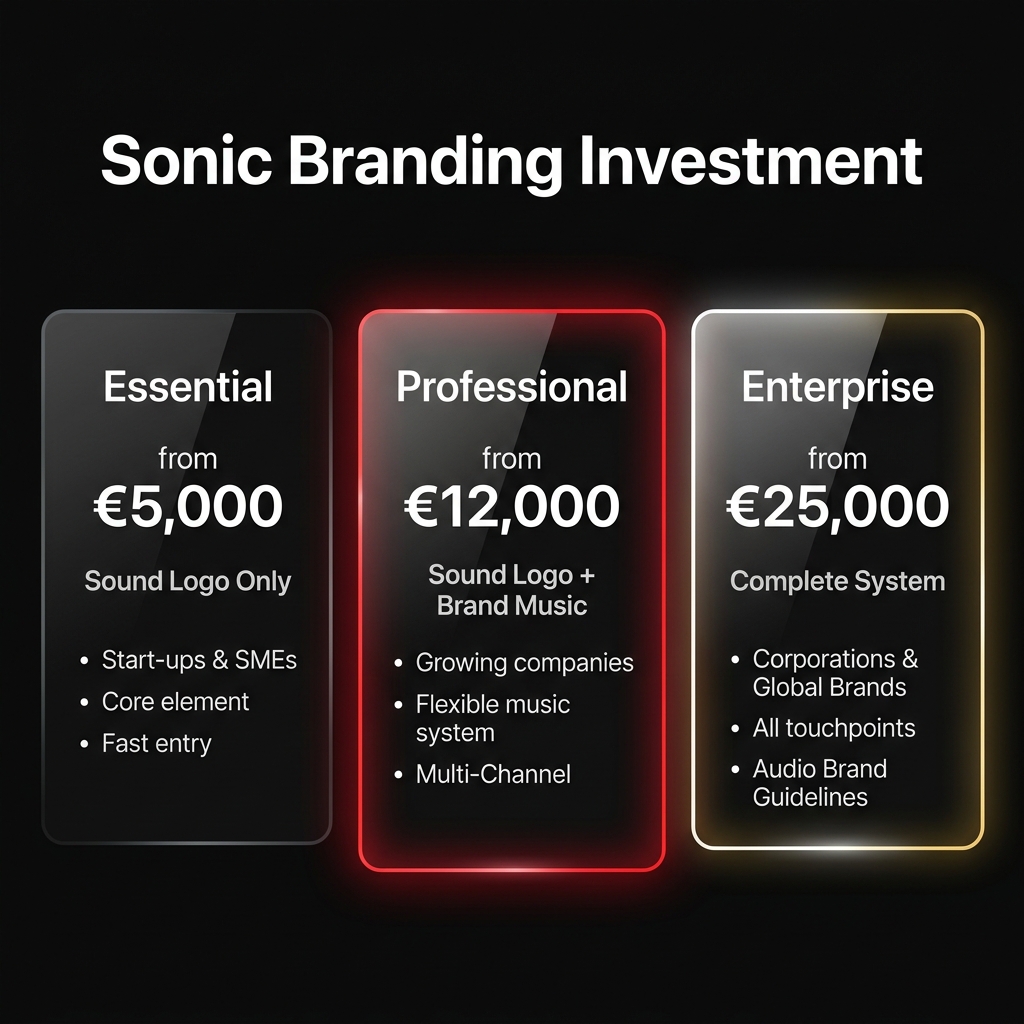
The investment varies depending on the scope and depth of the project. As a guide:
- Sound Logo Only (Essential): from €5,000, for start-ups and SMEs who want to begin with the core element.
- Sound Logo + Brand Music (Professional): from €12,000, for companies that need a flexible music system for multiple channels.
- Complete Sonic Branding System (Enterprise): from €25,000, for corporations and brands with many touchpoints and global rollout.
Find detailed information in our article Sound Logo Costs: What Does an Acoustic Brand Mark Cost? or directly on our Sound Logo service page.
Ready for Sonic Branding?
We offer a free, no-obligation consultation. As a Sonic Branding agency in Frankfurt, we have developed sound logos and acoustic identities for brands like DWS, Porsche, and Aktion Mensch.
Schedule a consultation →Research, source selection, and editorial responsibility: Rahim Erbil. We used AI while drafting and researching. Every sentence was checked by hand before it landed here. Made with Herzblut and AI.

The same name on every line.
Concept, composition, sound design, mix, master: at Campera Media your project passes through one pair of hands, from the first briefing to the last second of the fade-out.
Meet Rahim →Frequently Asked Questions
About Sonic Branding.
None, the terms are used synonymously. "Sonic Branding" is more common in the international context, "Audio Branding" in the German-speaking market. Both refer to the strategic use of sound for brand management.
Sonic Branding is worthwhile for any company that communicates across multiple channels, regardless of size. Start-ups can begin with a Sound Logo (from €5,000), corporations invest in complete systems. What matters is not the size but the number of touchpoints.
That depends on the exploitation strategy. A Sound Logo can be produced as a commissioned composition royalty-free (full buy-out), or registered through a publisher with a performing rights organization. We provide transparent advice on both options and their financial implications.
Typical KPIs are: brand recall (aided/unaided), emotional brand attribution, advertising effectiveness studies, and engagement metrics on acoustic channels. Specialised market research institutes offer standardised Sonic Branding tracking studies.
Yes, that is one of the greatest advantages. Sound is language-independent and works across cultures. The Intel Sound Logo sounds the same in Tokyo as it does in Frankfurt. Only the Brand Voice should take cultural differences into account.
Ready for sound
that impacts?
Tell us about your project, free and without obligation. We will get back to you within 24 hours with concrete ideas for your audio identity.