Sonic Branding Trends 2026
7 Developments Brands Need to Know Now

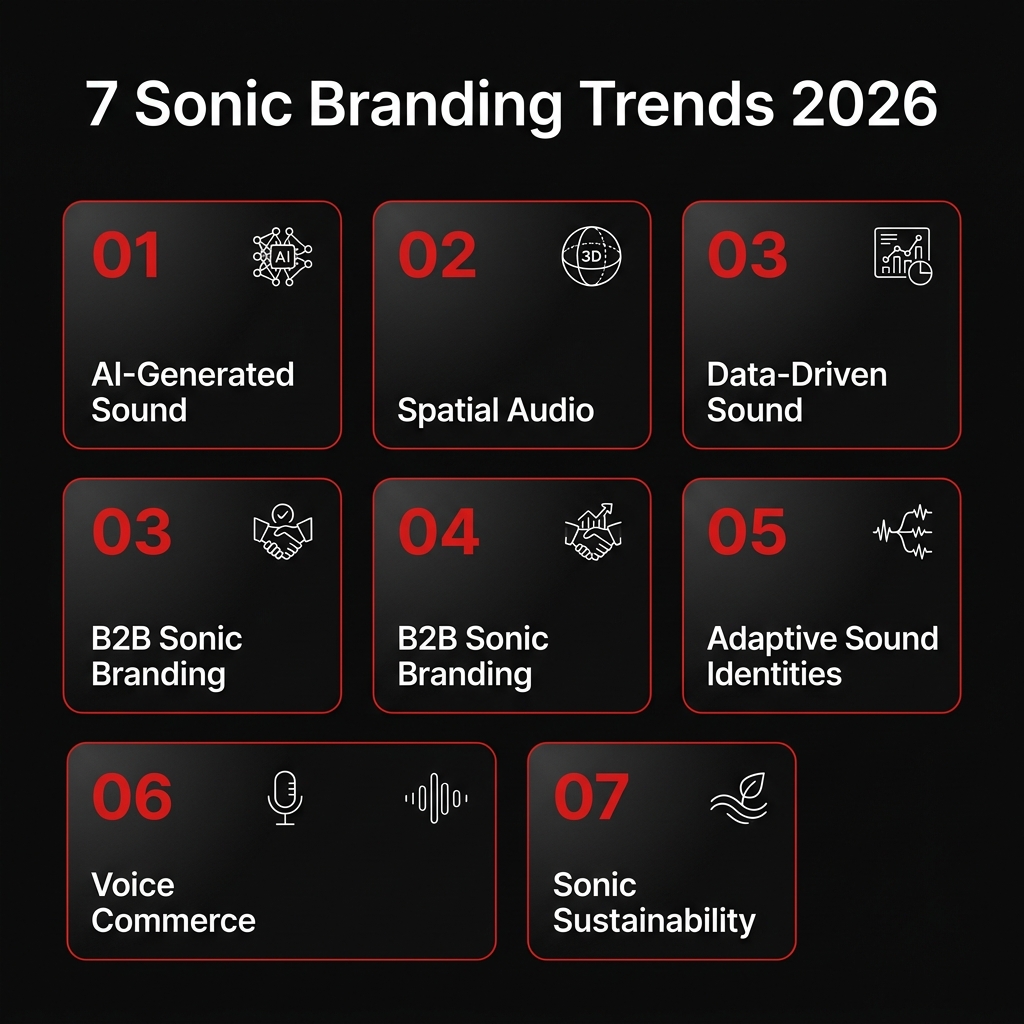
Sonic Branding Trends 2026 make one thing clear: acoustic brand management is facing a fundamental shift. Artificial intelligence, immersive audio formats, and data-driven sound strategies are changing how brands sound, and how consumers experience those sounds. For CMOs, brand managers, and marketing decision-makers, it is critical not just to know these developments but to evaluate them strategically. In this trend guide we analyse the seven most important Audio Branding trends that will shape your acoustic brand strategy in 2026.
Contents
- AI-Generated Sound Becomes a Standard Tool
- Spatial Audio Transforms the Brand Experience
- Data-Driven Sonic Branding, Sound Becomes Measurable
- Sonic Branding Becomes Essential for B2B Brands
- Adaptive Sound Identities, One Sound, a Thousand Variations
- Voice Commerce Redefines Brand Voice
- Sonic Sustainability, Sound Communicates Values
- Conclusion, What Does This Mean for Your Brand?
- Frequently Asked Questions
1. AI-Generated Sound Becomes a Standard Tool
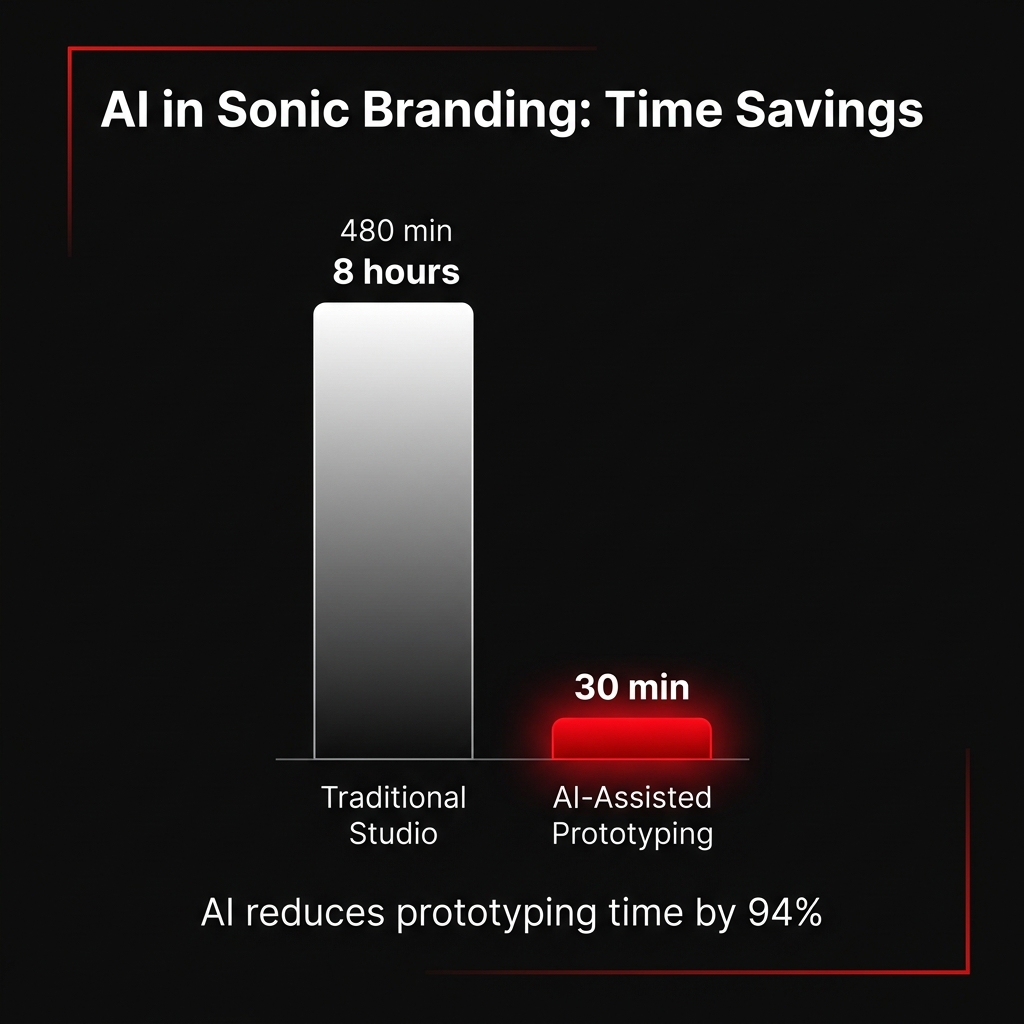
Generative AI has arrived in music production, and with it, in Sonic Branding. Tools like Google DeepMind's Lyria, Udio, and Suno make it possible to generate musical prototypes in seconds that would have required hours of professional studio work just two years ago. But what does that mean for acoustic brand management?
The crucial point: AI does not replace strategy, it accelerates creation. An AI-generated Sound Logo without strategic anchoring in the brand personality remains interchangeable. Brands that use AI wisely employ it as an exploration tool: faster moodboards, more variations in the concept phase, automated adaptations for different touchpoints.
The challenge lies in quality management. While AI-generated music is becoming technically more convincing, it often lacks the emotional depth and cultural understanding that an experienced composer brings. Best practice 2026: use AI for prototyping and scaling, but keep final production and strategic control in human hands.
"AI is the new piano, a powerful instrument, but no substitute for the musician who knows what to play."
For businesses, this means: review your existing Sonic Branding strategy and identify areas where AI-assisted production can deliver efficiency gains, without losing creative control.
2. Spatial Audio Transforms the Brand Experience
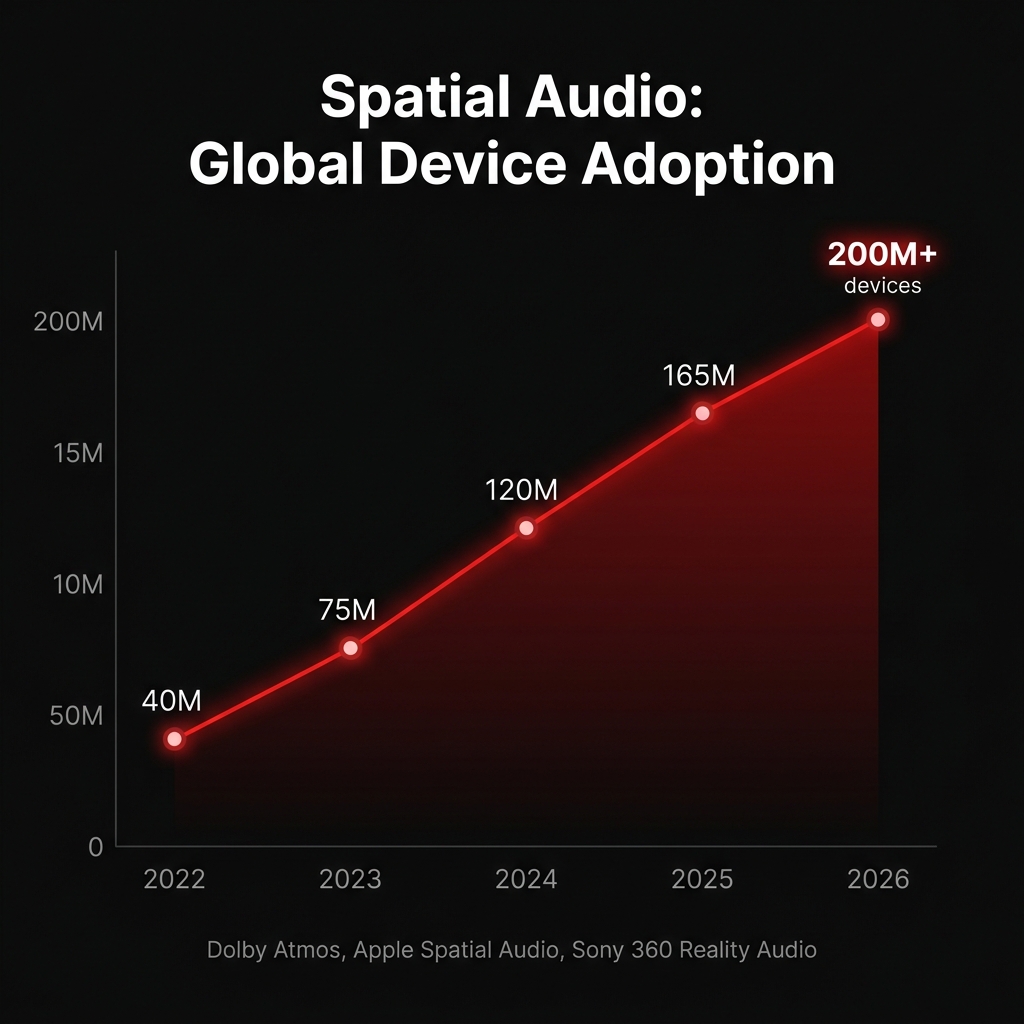
With the growing adoption of Dolby Atmos, Apple Spatial Audio, and Sony 360 Reality Audio, three-dimensional sound is becoming the new standard. What was once reserved for cinemas and premium headphones reaches the mainstream in 2026: over 200 million devices now natively support Spatial Audio.
For Sonic Branding, this opens entirely new possibilities. Instead of thinking of a Sound Logo in stereo, brands can now create immersive sound experiences that literally surround the listener. Imagine: an automotive Sound Logo where the engine "drives" from left to right through the headphones. Or an insurance brand whose sound world creates a feeling of security by enveloping the listener.
Application areas include:
- Spatial Audio Advertising: Podcast and streaming ads in Dolby Atmos demonstrably generate higher attention and recall than stereo spots.
- Immersive Brand Experiences: Trade shows, pop-up stores, and flagship locations use 3D audio for multi-sensory brand experiences.
- AR/VR Integration: In the metaverse and augmented reality applications, spatial sound is no longer optional but a prerequisite for credible brand presence.
A practical example: Campera Media developed a spatial sound experience for the Porsche 911 Soundbar that translates the sonic character of the boxer engine into a premium audio product, a pioneer in Spatial Sonic Branding.
3. Data-Driven Sonic Branding, Sound Becomes Measurable
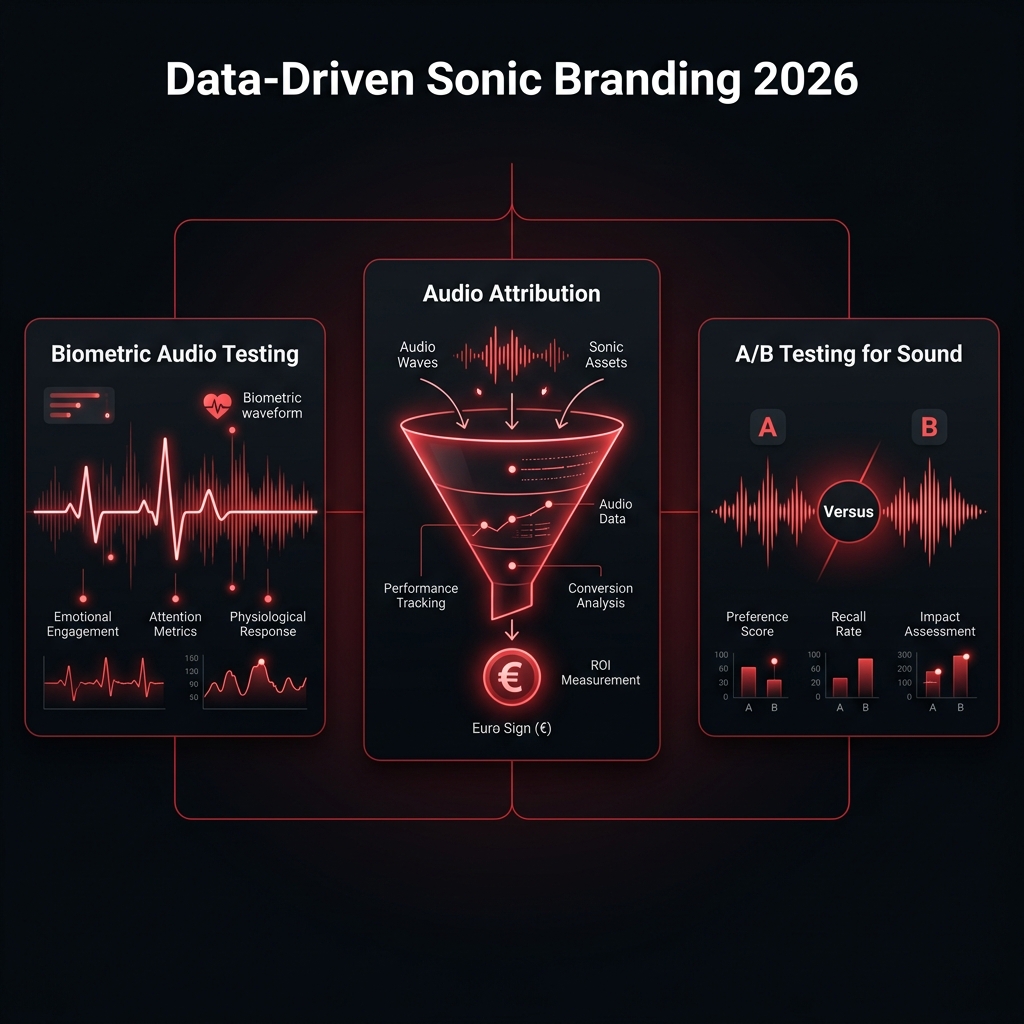
The biggest shift in Sonic Branding 2026: sound finally becomes measurable. New audio analytics platforms enable real-time tracking of the impact of acoustic brand elements, from emotional response to conversion rate.
Previously, measuring Sonic Branding success relied on expensive market research studies. In 2026, three developments are changing this paradigm:
- Biometric Audio Testing: Eye-tracking is complemented by "ear-tracking". Galvanic Skin Response (GSR) and heart rate measurements reveal which sound elements trigger the strongest emotional response.
- Audio Attribution: Similar to visual advertising, brands can now track which acoustic assets lead to which conversions. Sound Logo heard? → Brand recall measured. Brand Music in podcast? → Engagement rate analysed.
- A/B Testing for Sound: Different sound variations can be systematically tested against each other, which key conveys more trust? Which tempo creates more urgency?
For marketing decision-makers this means: Sonic Branding evolves from a "nice-to-have" to a measurable performance channel. The days of putting "any music" under the brand film are over. Every sound can now be evaluated for its ROI, an argument that especially convinces CFOs.
4. Sonic Branding Becomes Essential for B2B Brands
For a long time, Sonic Branding was a topic for B2C brands with large media budgets. In 2026, that is changing fundamentally. B2B companies are discovering acoustic brand management as a strategic differentiator, and for good reason.
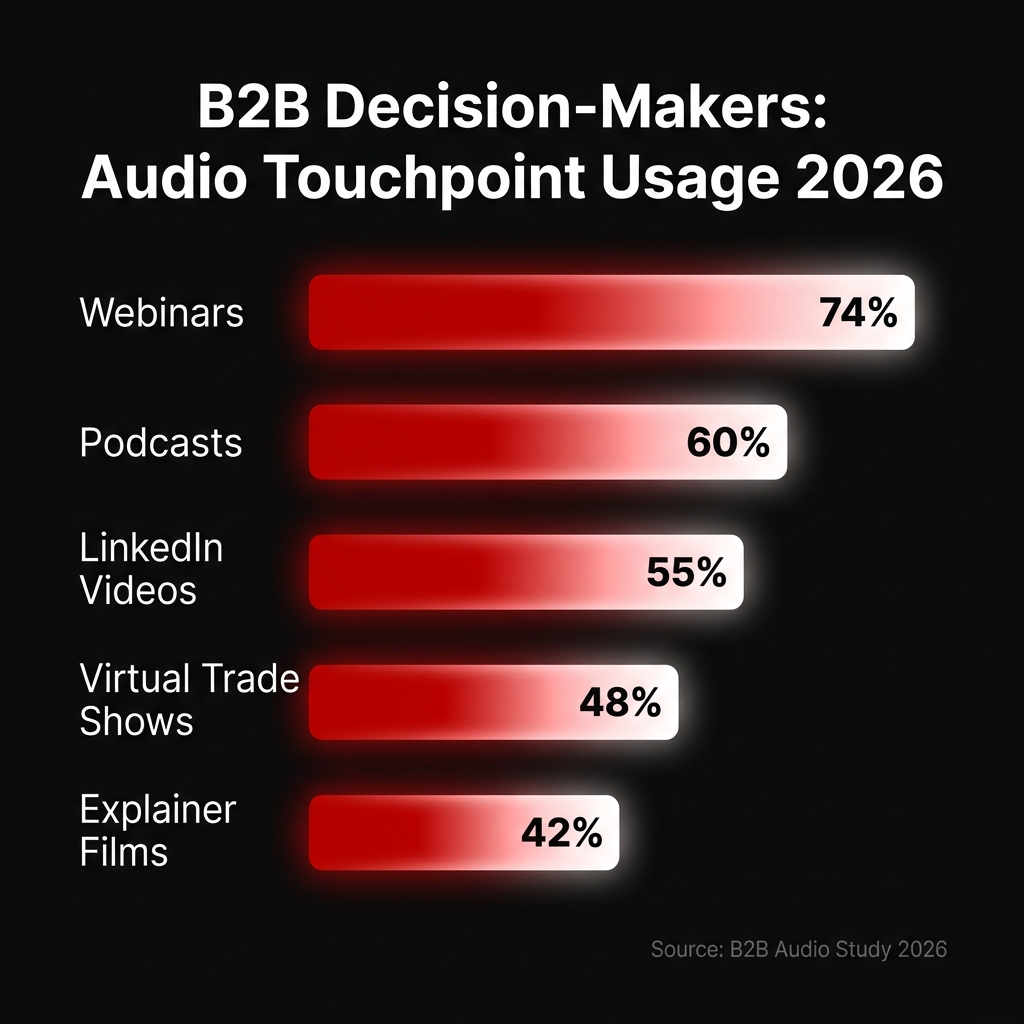
B2B communication has changed radically: webinars, podcasts, virtual trade shows, LinkedIn videos, explainer films, and digital platforms are now standard touchpoints. All these formats have one thing in common: they need sound. And those without strategic sound either sound generic, or not at all.
Three drivers are accelerating this trend:
- Podcast Boom in B2B: Audacy and Veritonic measured in 2023 that consistent sonic branding lifts podcast recall by 14 %, and radio spot recall by 17 %. Consistent audio branding (intro, outro, jingle, transition sounds) creates recognition and professionalism.
- Virtual Events: Hybrid and virtual trade shows need acoustic identities for stages, breakout rooms, and digital lounges.
- Employer Branding: Recruiting videos, onboarding platforms, and employer branding campaigns benefit enormously from consistent sound.
A practical example: Campera Media developed a complete Sonic Branding for DWS (Deutsche Bank Group) that acoustically conveys the brand values of trust, innovation, and global competence, a reference project for B2B Sonic Branding in the financial sector.
5. Adaptive Sound Identities, One Sound, a Thousand Variations
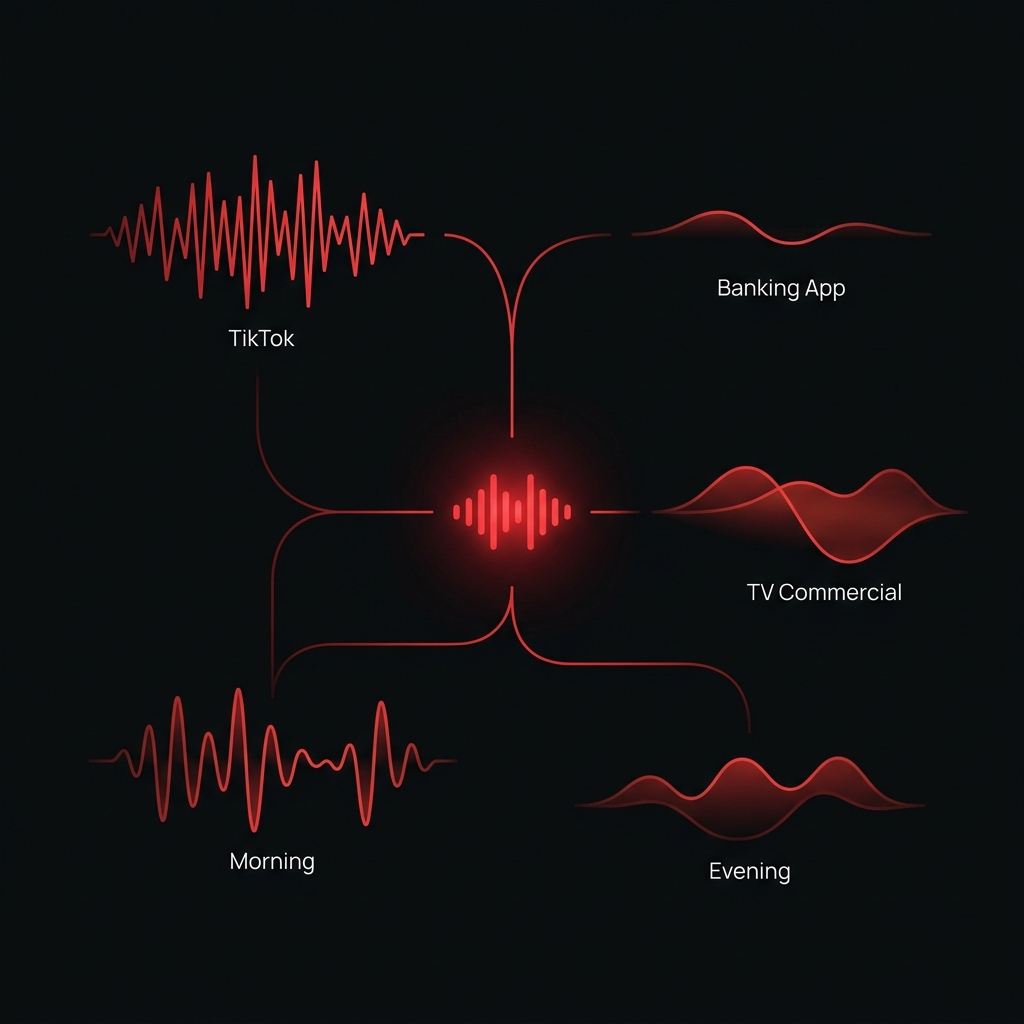
The days of rigid Sound Logos are over. The 2026 trend moves toward adaptive sound identities that dynamically adjust to context, platform, and audience, without losing recognisability.
What does that mean in practice? Imagine a Sound Logo that sounds different on TikTok than in a TV spot. That appears trustworthy in the banking app and energetic in the youth campaign. That sounds different in the morning than in the evening. Same DNA, different expression.
The technological foundations are mature in 2026:
- Parametric Sound Design: Sound elements are conceived not as fixed audio files but as generative systems that respond to parameters (time of day, usage context, platform).
- Context-Aware Audio: Smart devices and apps can use context data to activate the appropriate sound mode, Focus Mode, Active Mode, Relax Mode.
- Versioning: Instead of one master version, hundreds of micro-adaptations are created that still belong to the same sound family.
For brand managers this means: the next Sonic Branding brief should not request "a Sound Logo" but an adaptive sound system, flexible enough for every touchpoint, consistent enough for instant recognition.
6. Voice Commerce Redefines Brand Voice
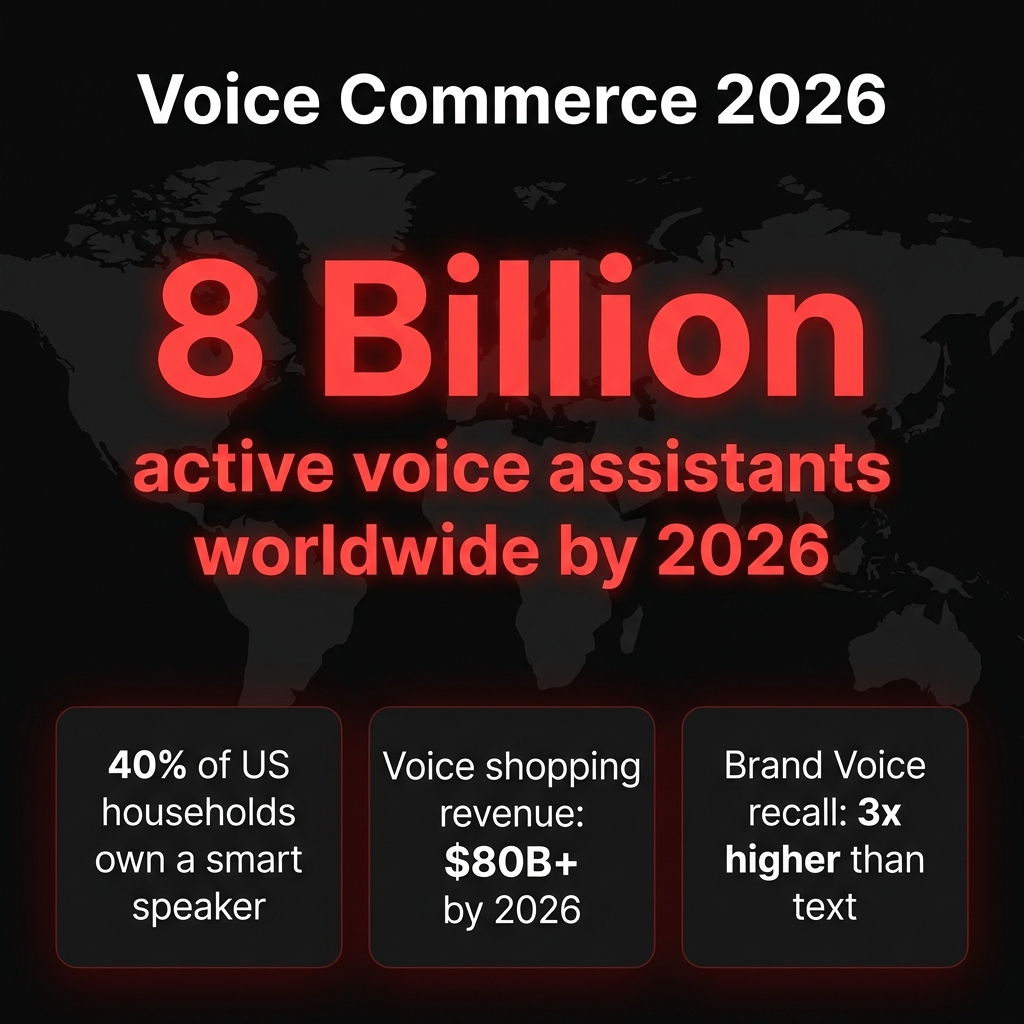
Voice Commerce is growing rapidly: according to current forecasts, over 8 billion voice assistants will be active worldwide in 2026. Alexa, Google Assistant, Siri, and industry-specific voice interfaces are becoming central touchpoints, making Brand Voice a critical brand element.
Until now, "Brand Voice" was a visual concept, tonality in texts. In 2026 it becomes literal: how does your brand sound when it speaks? What vocal quality, what intonation, what speaking pace represents your company?
The implications are far-reaching:
- Custom Voice AI: Brands develop their own synthetic brand voices that sound consistent across all voice touchpoints, from IVR systems to voice assistants.
- Conversational Commerce: Orders via voice commands require a trustworthy, recognisable brand voice that radiates security and competence.
- Audio-First Content: Podcasts, voice search, and audio ads are becoming the primary content format, and need a defined acoustic personality.
The consequence: brand voice belongs in every Sonic Branding strategy. Those without a defined Brand Voice in 2026 leave their acoustic brand presence to chance, or third-party providers.
7. Sonic Sustainability, Sound Communicates Values
The final major trend connects Sonic Branding with the mega-theme of sustainability. Sonic Sustainability describes the approach of communicating sustainability values not just visually and textually but also acoustically.
Why is this relevant? Because sustainability is a purchase criterion for 78% of European consumers (Eurobarometer 2025), but most brands limit their sustainability communication to visual channels. Sound offers an emotional dimension that conveys authenticity, or exposes its absence.
Concrete applications in 2026:
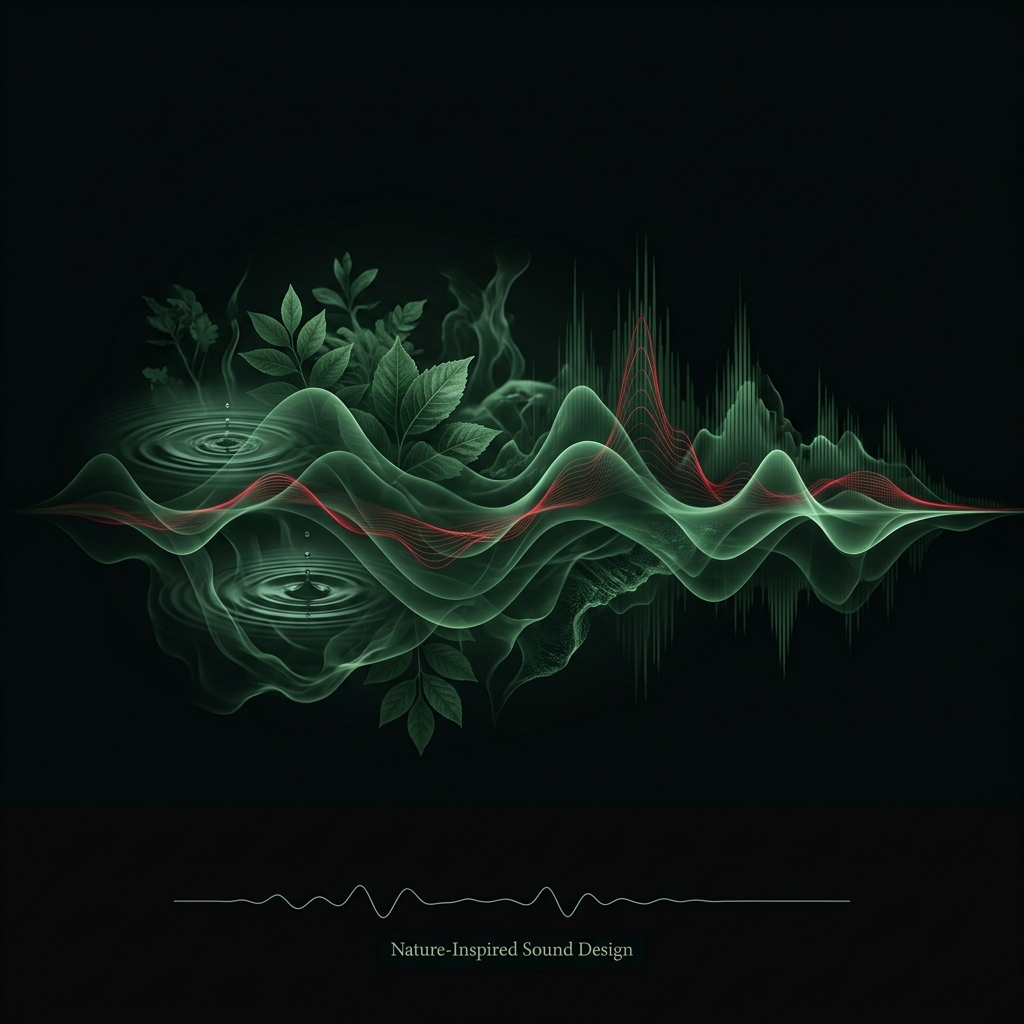
- Nature-Inspired Sound Design: Natural sounds, field recordings, and organic textures replace synthetic sounds and signal environmental awareness.
- Sonic Transparency: Brands use sound to make origin and production processes audible, the sound of the coffee bean, the rustle of sustainable packaging.
- Reduced Sound Design: Less is more. Minimalist sound identities convey values like mindfulness, resource conservation, and quality.
Importantly: Sonic Sustainability must be authentic. Greenwashing doesn't work acoustically either. Those who use nature sounds but don't live sustainable corporate values risk a loss of authenticity worse than silence.
Conclusion, What Does This Mean for Your Brand?
The Sonic Branding Trends 2026 paint a clear picture: acoustic brand management is becoming more technological, more measurable, and more strategically relevant than ever. AI accelerates creation, Spatial Audio expands the space, data makes sound measurable, and adaptive systems enable flexibility without identity loss.
For brand managers, three concrete recommendations emerge:
- Conduct an audit: Where does your brand stand acoustically? Do you have consistent Sonic Branding or do you sound different on every channel?
- Invest future-proof: The next Sonic Branding should be adaptive, data-driven, and Spatial-Audio-ready, not just a static Sound Logo.
- Involve experts: Complexity is increasing. A specialised Sound Design agency brings the strategic and technical know-how that internal teams rarely have.
One thing is certain: brands that don't think acoustically in 2026 are losing a channel that is more emotional, more measurable, and more impactful than ever before. The question is no longer whether, but how you deploy Sonic Branding strategically.
Ready for the Sonic Branding Future?
We offer free, no-obligation advice on your acoustic brand strategy for 2026. As a Sonic Branding agency in Frankfurt, we have developed sound identities for brands like DWS, Porsche, and Opel.
Schedule a consultation →Research, source selection, and editorial responsibility: Rahim Erbil. We used AI while drafting and researching. Every sentence was checked by hand before it landed here. Made with Herzblut and AI.

The same name on every line.
Concept, composition, sound design, mix, master: at Campera Media your project passes through one pair of hands, from the first briefing to the last second of the fade-out.
Meet Rahim →Frequently Asked Questions
About Sonic Branding Trends.
The seven key trends are: AI-generated sound as a production tool, Spatial Audio for immersive brand experiences, Data-Driven Sonic Branding with measurable KPIs, the rise of B2B Sonic Branding, adaptive sound identities, Voice Commerce as a new Brand Voice channel, and Sonic Sustainability for value communication.
AI tools like Lyria, Udio, and Suno enable faster prototyping, automated adaptations for different touchpoints, and personalised sound experiences. However, creative strategy and final production remain in human hands, AI is a tool, not a replacement.
Spatial Audio creates three-dimensional sound experiences via headphones or speaker setups. Formats like Dolby Atmos, Apple Spatial Audio, and Sony 360 Reality Audio enable immersive brand experiences in advertising, at trade shows, and in AR/VR applications.
Absolutely. B2B brands increasingly communicate via acoustic channels: podcasts, webinars, LinkedIn videos, virtual trade shows. Consistent Sonic Branding strengthens trust and recognition in an environment that has been almost exclusively visual.
Investment varies by scope: individual trend elements like an AI-assisted sound update or a Spatial Audio adaptation start from €5,000. Complete Sonic Branding systems with adaptive identities and Spatial Audio start from €25,000. More details in our article Sound Logo Costs.
Ready for sound
that impacts?
Tell us about your project, free and without obligation. We will get back to you within 24 hours with concrete ideas for your audio identity.